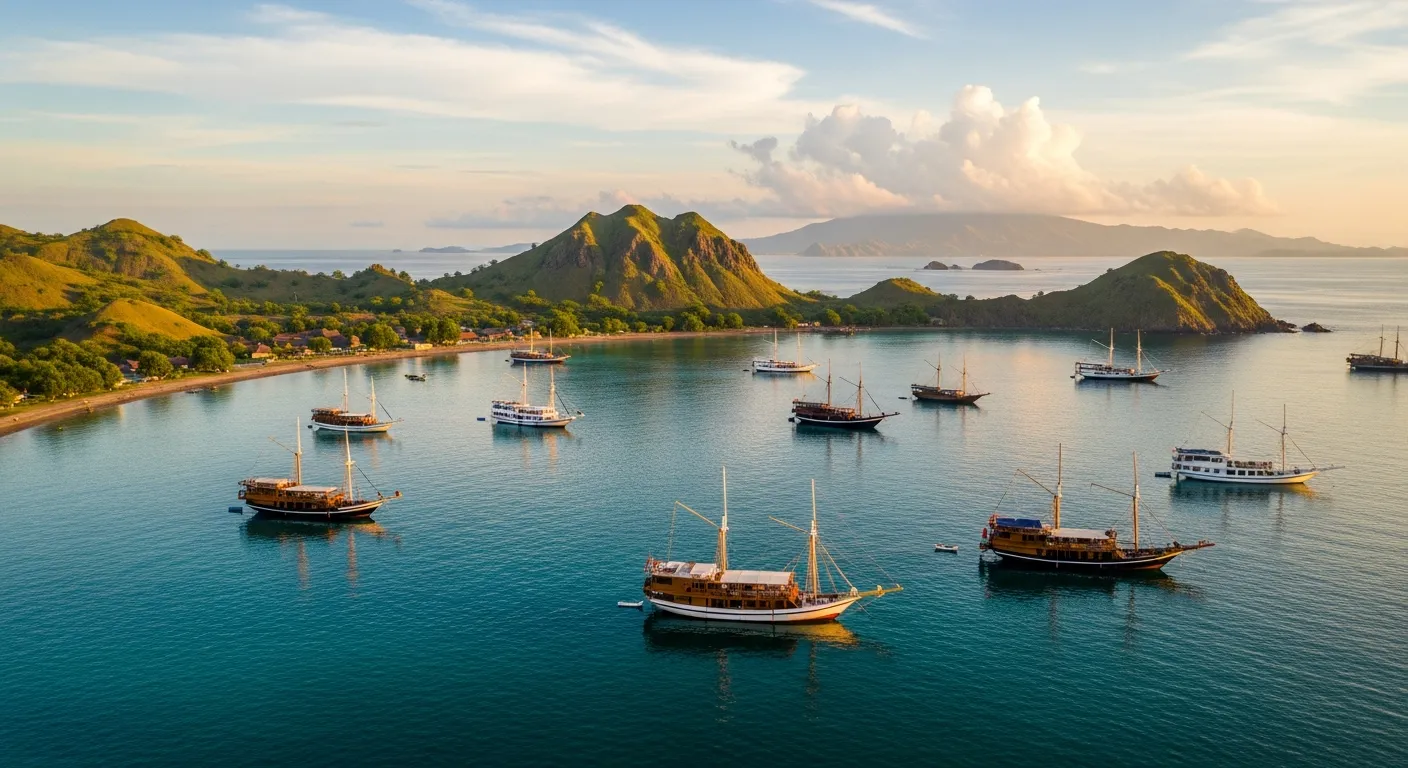
You know that thing travel sites do where they say "the best time to visit anywhere is shoulder season" and call it a day? Yeah, Labuan Bajo deserves better than that. There's a real difference between September and February here — different ocean, different sky, different photo, different price tag.
Let me walk you through what each window is actually like so you can pick based on what you care about, instead of guessing.
The 60-second answer
If you just want me to point at a month: June or September. June gets you peak manta ray season with calm seas; September gives you dry, clear conditions with thinner crowds and softer prices. Either is hard to mess up.
If you have a flexible schedule and a specific obsession — diving, photography, smallest budget, fewest people — keep reading. The right window genuinely changes based on what you're optimizing for.
What "season" even means here
Labuan Bajo runs on two seasons, not four:
Dry season — April through November. Calm seas, sunny days, low humidity, blue water. This is what every Komodo postcard you've ever seen was shot in. Boats run on schedule, dives happen, sunsets show up like clockwork.
Rainy season — December through March. Tropical downpours (intense but usually short), rougher seas, lower underwater visibility, fewer boats on the water. Some operators close entirely; others run reduced schedules.
That's it. Two seasons. Easy.
Month by month — the actual differences
April — the gentle opening
Seas calming down, prices still soft from the rainy-season tail, fewer tourists than you'd expect. Underwater visibility can still be a bit milky early in the month. By the end of April it's basically perfect. Good window if you want quiet trails on Padar.
May — sweet spot starting
Conditions almost identical to June but ~15% cheaper because European school holidays haven't kicked in. Manta rays starting to congregate. This is the local-knowledge month.
June — peak everything
Manta ray season, glass-flat seas, picture-perfect skies. The catch: prices climb, popular boats sell out 2–3 months ahead, and Padar at sunrise feels less serene with 80 people sharing the ridge. Worth it for diving though — Castle Rock and Crystal Rock are at their best.
July & August — high season
The busiest weeks of the year, honestly. Boats are full, hotels in town are pricey, and you'll wait in line for the Komodo dragon walk. The diving is still amazing. If you're coming with kids on summer break and don't have flexibility, just budget for the premium.
September — my personal favorite
The crowds thin out fast in early September because northern-hemisphere schools are back in session. Weather is still bone-dry, manta rays are still around (just slightly fewer). You can usually score a 15–25% discount on boats compared to August. If I'm picking my own dates, this is it.
October — last call for guaranteed dry
Still dry, still beautiful, but starting to get a bit warmer and more humid. Lower-deck cabins begin to feel sticky. Manta numbers dropping. Crowds minimal. Underrated month.
November — transition gamble
Officially still dry season, but the first storm fronts can show up late in the month. Insanely cheap. Most days are still fine. I'd say go for it if your itinerary is flexible and you don't mind that one rainy afternoon.
December through March — rainy season real talk
The conventional wisdom is "don't go." That's overcautious. Real breakdown:
- December — mostly fine, occasional storms, roughly half the price of August
- January & February — wettest months, rougher crossings, dive vis sometimes below 10m, some boats out of service
- March — rain tapering off but seas still lumpy
I've had friends do January trips and love them. The trick: book a bigger boat (more stable in chop), keep your itinerary loose, and don't pre-book non-refundable internal flights.
Picking by what you actually care about
Diving: April–June (manta peak + great vis), or September (post-peak, fewer divers per site).
Photography — sunrise, sunset, no crowds: September, October, or early April.
Budget: November or March — the shoulder edges of the rainy season, mostly dry, prices crash.
Family with kids on school break: Just take July or August. Pay the premium, accept the crowds, it's still incredible.
Maximum solitude: Mid-September weekdays. I'm serious.
Booking timing — the part nobody tells you
The good phinisi boats sell out two to three months ahead for peak season (June–September). If you're targeting July or August specifically, you're really booking in March or April.
For shoulder season (April, May, October, November), 4–6 weeks ahead is usually enough.
Rainy season — you can sometimes walk in and book a same-week trip for a steep discount. Risky but doable, and the prices are wild.
When you're ready to actually compare boats with real availability instead of playing email-tag with five operators, head to charterphinisi.com. You can pick dates, see which cabins are actually open, and book directly with verified pricing — way less painful than the WhatsApp shuffle.
Stuff that's basically always true (any month)
- Mornings are calmer than afternoons. Sunrise hikes and morning dives are flatter, regardless of month.
- Padar Island sunrise is worth it even when it's a little crowded. Just don't go on a July peak weekend.
- The Komodo dragons are active year-round. Don't pick your trip based on dragon viewing — they show up.
- Mantas migrate but don't fully disappear. Even in a "low manta" month, you have a real shot at one or two.
The honest non-answer
The "best" month depends on whether you're optimizing for sea conditions, marine life, budget, or solitude. There's no single right answer — but if you've been waffling for weeks, just book September or June and stop researching.
A Komodo phinisi trip is the kind of thing where the right month makes a great trip slightly better, but the wrong month rarely makes it bad. Get the dates locked in, get the boat booked, and go.
When you're ready, head over to charterphinisi.com, pick your window, and grab a cabin while it's still there. The June ones go fast — you've been warned.