Diving Manta Point in Komodo: What It's Actually Like
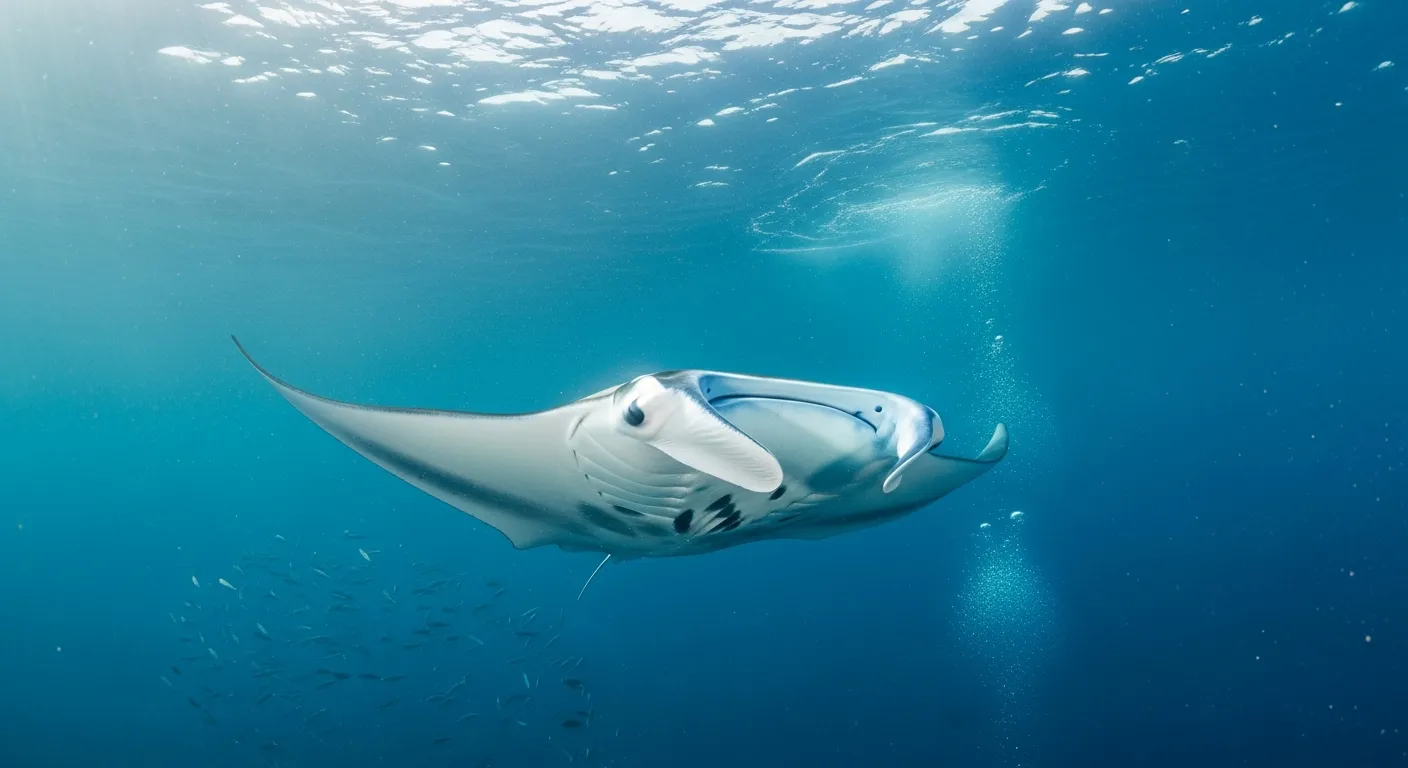
Okay, let me set the scene. You're descending into 22 degrees of cool current, the visibility is somewhere between 'pretty good' and 'milky soup,' and your divemaster grabs your fin and points. You look up — and there are seven mantas circling above you in a slow, patient rotation. Their bellies are bright white. Their mouths are wide open, filtering plankton from the water. They are five meters across.
Yeah. That's Manta Point in Komodo. And honestly? It's worth every long flight to get here.
But here's the thing nobody tells you. Half the trips called 'manta day' don't actually deliver mantas. The site has very specific tide windows, the boat has to be there at the right hour, and a lot of operators just hope for the best. So let me share what I've learned over a stack of dives there — the real stuff, not the brochure version.
Where exactly is Manta Point?
There are technically two spots people call 'Manta Point' in Komodo National Park. Don't mix them up.
Karang Makassar (sometimes called the central manta site) is the famous one — a long shallow reef ridge in the channel between Komodo Island and the mainland of Flores. Manta rays come here for the cleaning stations and the plankton-rich currents. This is where 90% of dive operators take you when they say 'manta point.'
Manta Alley in the south of Komodo is the other one — wilder, deeper, much stronger currents, and on a good day you'll see schooling mantas instead of just visiting ones. Less accessible, and only certain liveaboards include it on the route.
For most travelers, Karang Makassar is what you want. It's a drift dive in fairly mild current most of the time, depths of 8 to 20 meters, and you essentially fly along the reef while mantas come and go overhead.
When mantas actually show up
This is the part operators won't be specific about because it's complicated. Here's the real answer:
- Peak season: December through April. The west monsoon pushes plankton into the channels. Mantas show up to feed. December and January are the wildest — sometimes 15+ mantas in a single dive.
- Shoulder: November and May. Still good. Less consistent. You might see 3-5 on a typical dive.
- June through October: the dry season. Visibility is much better, but manta numbers drop. You can still get lucky — there's a smaller resident population — but if mantas are your one goal, this isn't your season.
The other variable is tide. Mantas come up to feed and clean during specific tide windows. A good operator times the skiff drop to those windows. A lazy operator just shows up at lunchtime because it's convenient. Huge difference in your day.
What a real manta day looks like
If you're on a properly run liveaboard, here's the rhythm:
- 5:30am wakeup. Yes, really.
- Briefing on the dive deck. Your guide explains the current direction, where to position yourself, and the absolutely critical rule: don't touch, don't chase, don't blow bubbles directly underneath them.
- Skiff drop at slack tide or just-after. Negative entry — you go straight down so the current doesn't blow you away from the site.
- 50-60 minutes drifting along the reef at 10-15 meters, scanning the blue.
- When you see one, you stop and become a piece of furniture. Mantas are curious. If you behave, they come check you out.
The magic is when you're hovering near a cleaning station and a manta parks itself directly above you for two minutes while wrasses pick parasites off its skin. You go back to the boat shaking with adrenaline. You tip the divemaster.
Tips that will save your trip
A few things I wish someone had told me:
- Don't book just one day-trip. Book a liveaboard. A single day from Labuan Bajo means one shot at the site, and one missed tide window can wreck the whole thing. A 4-night liveaboard gives you 3-4 attempts and dramatically better odds. Plus you'll dive Castle Rock, Crystal Rock, Batu Bolong, and other Komodo sites you'd otherwise miss.
- Bring a 5mm wetsuit, not a 3mm. Komodo water gets surprisingly cold (22-24°C in peak manta season). Your buddy in shorts will be miserable on dive 3.
- Reef hooks help on the strong-current sites. Your operator should provide one.
- Keep your camera small. You don't need a giant rig. A GoPro or compact will get the shots and won't make you flail in current.
- Listen to your guide on currents. Komodo has some of the strongest currents in Asia. Down-currents are real. This is not a place to ignore briefings.
Picking the right boat
This is where most people overpay or end up on a sketchy boat. Komodo has hundreds of liveaboards, ranging from clean well-run dive boats to repainted fishing vessels with a regulator hose and prayers.
What to look for:
- Real divemasters with Komodo seasons under their belt. Ask how many years they've worked the channels.
- Two tenders, not one. With one tender, you wait. With two, the boat runs simultaneous groups so you don't lose dive time.
- Nitrox available. For a manta dive at 12-15 meters, nitrox extends your bottom time materially.
- Recent reviews mentioning specific dive sites. A 2025 review that says 'we saw 8 mantas at Karang Makassar on day 2' is worth more than five-star fluff.
The mess with Komodo dive booking is that operators sell direct, through agents, through booking platforms — and prices vary 30%+ for the same dates. I usually point friends to charterphinisi.com because they pull the legit Labuan Bajo dive liveaboards into one place with real cabin availability and the same prices the operators sell direct. You can compare specific boats, see what's actually open in the next six months, and ask questions before booking. Saves a lot of WhatsApp back-and-forth.
Beyond mantas
Don't make manta day the only thing you focus on. Komodo's dive sites are stupidly good across the board:
- Castle Rock and Crystal Rock for sharks and giant trevally action — fast-water dives, exhilarating.
- Batu Bolong for the prettiest reef in Komodo, hands down. Tiny pinnacle, massive fish.
- Cauldron for reef sharks and turtles in the south.
- Manta Alley if your itinerary swings south — a chance at schooling mantas in deeper water.
A 4-5 night Komodo liveaboard typically dives 10-12 different sites. You'll come home with stories.
So, ready?
Look — diving Komodo is one of those experiences that gets stuck in your bones. Mantas, sharks, currents that feel like flying, and the kind of biodiversity that only happens at the edge of two oceans. Most people who do it once start planning the next trip on the flight home.
If you're seriously thinking about it, head to charterphinisi.com and check what's available in your travel window. Manta-season weeks (December–April) book out months ahead — the earlier you lock something in, the more boats are still on the table and the better your cabin. Don't overthink it. Book the trip. Go meet the mantas.