Snorkeling Komodo National Park: What You Actually See
So you've heard Komodo has incredible diving, but you don't have a certification or you just don't feel like wrestling with a regulator on vacation. Here's the thing nobody tells you up front: the snorkeling in Komodo is, weirdly, one of the best parts of the trip. You don't need a tank. You don't need a course. You just need a mask, fins, and a willingness to put your face in cold water.
Let me share what I've learned, friend-to-friend, after a stack of trips through Komodo National Park.
Why Komodo's snorkeling is unfairly good
Komodo sits at the meeting point of the Indian Ocean and the Pacific. That sounds like geography trivia, but it actually matters: nutrient-rich currents flow between the two basins, the islands force them to the surface, and the result is a ridiculously dense buffet for fish.
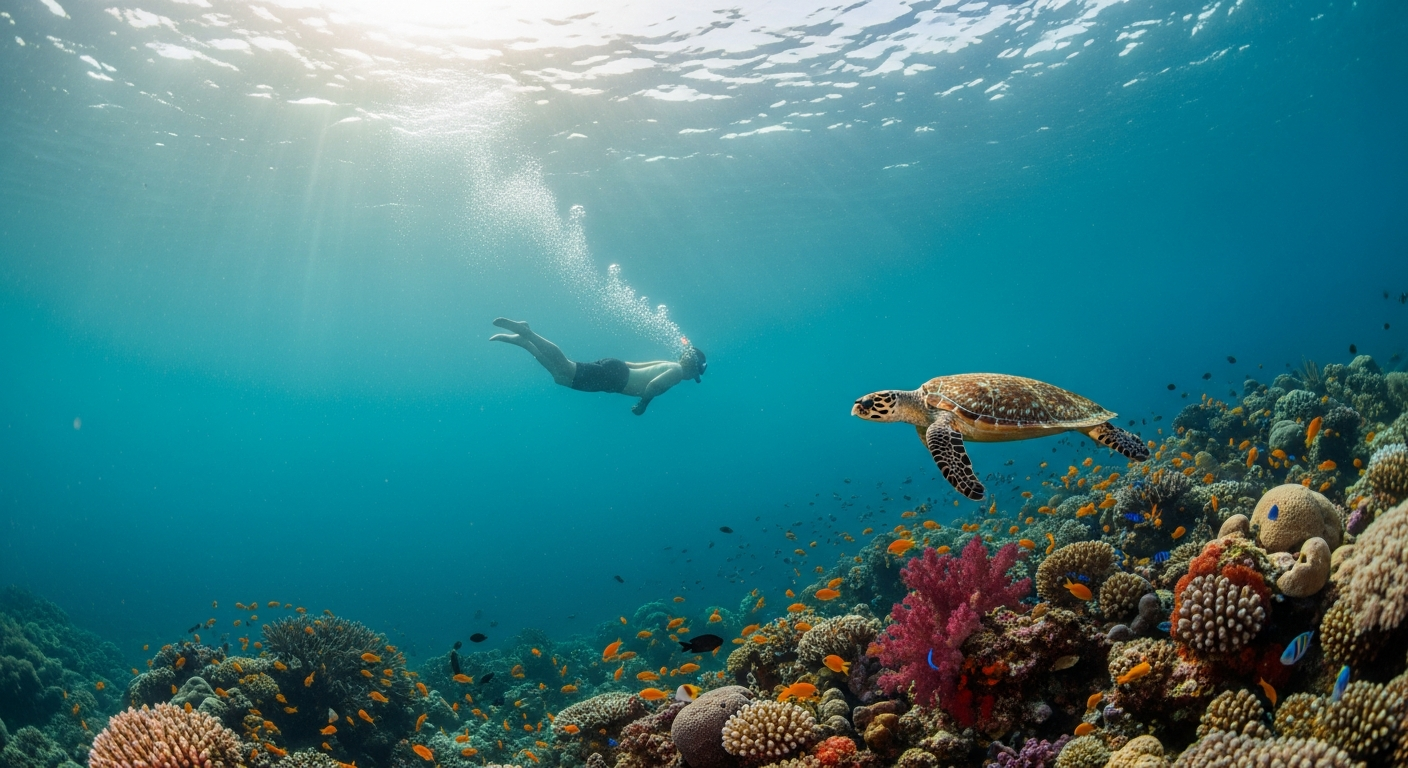
That's why the reefs here have schools of bumphead parrotfish, eagle rays, reef sharks, manta rays, sea turtles, and clouds of fusiliers all in shallow water. Most of the headline stuff is at 3-12 meters depth. Surface-snorkel range. You don't need to dive to see it.
The headline snorkel sites
Most multi-day Komodo phinisi trips hit these in some combination. Here's what to expect at each:
Manta Point (Karang Makassar)
The reason most people come. A long shallow reef in the channel between Komodo and Flores where mantas feed and clean. You'll snorkel along the surface as 4-meter mantas glide underneath you. December through April is peak — sometimes 10+ in a single drop. June through October you'll still see mantas, just fewer.
This is a drift snorkel — your boat tender drops you, you float with the current, the boat picks you up downstream. Listen carefully to the briefing.
Pink Beach
Yes, the sand is actually pink (microscopic red coral fragments mixed with white sand). The snorkel is at the rocky points either side of the beach. Big schools of damselfish, sea cucumbers everywhere, occasional small reef shark cruising at the edge. The sand itself is the photo, but the reef is genuinely worth getting in for.
Batu Bolong
This is my personal favorite. A tiny pinnacle in the channel — you can swim around it in 20 minutes. Above the waterline it's just a chunk of rock. Below, it's stacked floor-to-floor with fish: blue trevally, schooling sweetlips, dogtooth tuna patrolling the deep side, sometimes a turtle parked on the coral.
Currents around Batu Bolong can rip — your guide will plan for slack tide.
Crystal Rock and Castle Rock
Famous dive sites that are also snorkel-friendly on their flat tops. Reef sharks, schooling jacks, big trevally action. You get a more dramatic blue-water feel here than at Pink Beach.
Siaba Besar (the turtle place)
If you want to swim with sea turtles in shallow seagrass without trying, Siaba Besar is your spot. Calm, easy, almost guaranteed turtle encounters. Great for first-time snorkelers and kids.
Kanawa Island
Less wild, more pretty. Soft white-sand beach, coral garden right off the jetty, schools of bannerfish, easy swimming. Perfect for an afternoon snorkel after a hard morning of dragon-trekking.
Sebayur
A quieter spot most boats skip. Healthy hard coral garden, fewer crowds. If your captain offers it, say yes.
When to go
Komodo has two seasons that change your snorkel experience:
- April through November: dry season. Calm seas, great visibility (often 20+ meters), reliable boat days. Peak crowds in July-August.
- December through March: wet season. Choppier surface, sometimes lower visibility, but manta peak season — the rains push plankton into the channels and the mantas show up to feed.
For most snorkelers, May, June, September, and October are the sweet spots. The water is calm, the reefs are clear, and you can still catch the tail of manta activity.
A note on water temperature: it surprises people. Komodo is cool — 22-26°C in the channels, occasionally dropping to 20°C around peak manta season. Bring a long-sleeve rashguard or a 1-2mm shorty if you get cold easily.
Tips that actually help
A few things I wish someone had told me on my first trip:
- Bring your own mask. Boat-provided masks fit some faces but not others. A mask that doesn't seal will ruin every drop. A USD 30 mask from a dive shop saves the whole trip.
- Fins matter for current. Cheap shoe-fins on rental gear are useless against Komodo flow. Decent open-heel fins make the difference.
- Reef-safe sunscreen, always. Komodo crews will (rightly) shame you if you bring oxybenzone. Pack mineral-based stuff before you arrive — it's hard to find in Labuan Bajo.
- Learn the negative entry. Drift sites like Manta Point want you in the water immediately, not bobbing on the surface getting blown off the site.
- Listen to the current briefings. Komodo currents are no joke. Your guide will explain entry direction, where the boat will pick you up, and where NOT to swim. Take notes.
- Swim with the channel, not against it. If you fight the current, you'll exhaust yourself in 15 minutes and miss the wildlife.
What to pack
A short list specifically for snorkeling:
- Mask, snorkel, fins (your own if possible).
- Long-sleeve rashguard for sun and the slightly cool water.
- Reef-safe sunscreen and a hat.
- A waterproof phone pouch or GoPro. Big underwater camera rigs are overkill for snorkel.
- An anti-fog drop or a bottle of baby shampoo (a dab in your mask before each drop = no fog).
- A quick-dry travel towel.
How to book the trip
Three options for snorkel-focused Komodo trips:
- Multi-day phinisi liveaboard. The best value. Sleep on the boat, hit 8-12 sites over 3-4 days, dragons on the side. USD 350-700 per person on a share trip.
- Day trip from Labuan Bajo. Speedboat leaves at 5am, hits Padar viewpoint, Manta Point, Pink Beach, Komodo dragons, snorkel stop, back by 5pm. USD 60-120. Decent if you've only got one day.
- Private charter. Worth it for groups of six or more, or if you want a custom snorkel-heavy route.
The mess with Komodo booking is that operators sell direct, through agents, through booking platforms — prices vary 30%+ for the same dates. I usually point friends to charterphinisi.com — they pull the legit Labuan Bajo phinisi into one place with real cabin availability and the same prices operators sell direct. Compare boats, see what's actually open in your travel window, ask questions before you book. Saves the WhatsApp ping-pong with five different agents.
If your priority is snorkeling, ask the operator how many sites they hit per day and whether they include Manta Point on every trip. Some budget routes skip it.
So, ready?
Look — Komodo's reefs are the kind of thing you spend years dreaming about. Mantas overhead, turtles in the seagrass, a little reef shark cruising past in the blue. You don't need certifications. You don't need expensive kit. You just need to show up.
If you're seriously thinking about it, head to charterphinisi.com and check what's available in your travel dates. Dry-season weeks book out months ahead — the earlier you lock in, the more boats are still on the table and the better the cabin you'll get.
Don't overthink it. Book the trip. Pack your mask. Go meet the mantas.