Pink Beach Komodo Island: An Honest Guide
So you've seen the photos. The blush-colored sand, the turquoise water, that one drone shot everyone reposts — and now you're wondering if Pink Beach is actually as good in person as it looks.
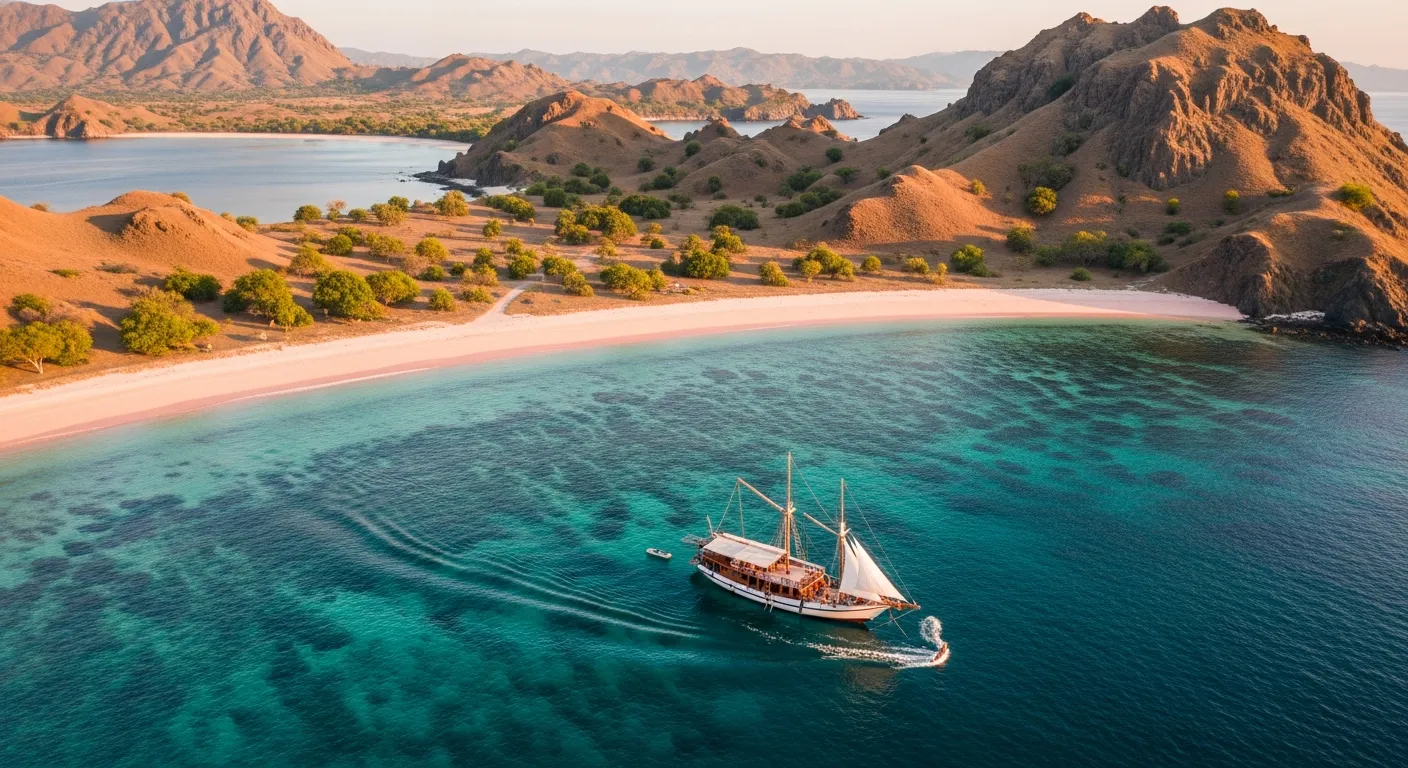
I'll be straight with you: it is. But it's not what most travel sites make it sound like. Pink Beach (or Pantai Merah, as locals call it) isn't some candy-colored dreamland. It's a quiet stretch of coastline on Komodo Island where the sand has a soft rosy tint that gets stronger when the sun hits it right. And once you understand what makes it special, you'll appreciate it way more than you would going in expecting a Photoshopped fantasy.
Wait, why is the sand actually pink?
Here's the thing nobody really explains. The pink color comes from microscopic creatures called Foraminifera — tiny single-celled organisms with reddish shells. When they die, their shells break down and mix with regular white coral sand, and over thousands of years that gives the beach its warm pink hue.
There are only about seven beaches like this on the entire planet. The other famous ones are in the Bahamas, Bermuda, and one in Greece. So yeah, you're on a pretty exclusive list once you set foot here.
When to go (and when NOT to go)
The best window is April through November. December through March is rainy season, and while the beach is still beautiful, snorkeling visibility tanks, the seas can get choppy, and the boat ride out from Labuan Bajo is genuinely miserable.
If you're going just for that "wow" first impression, morning light around 8–10 AM is when the pink really pops. The angle of the sun makes the shells reflect more warmly. Counterintuitive, but mid-day actually washes out the color a bit.
A pro tip from someone who's been
Avoid Sundays and Indonesian public holidays. Day-trip boats from Labuan Bajo flood the beach on those days and you lose a lot of the magic. Tuesday or Wednesday mornings are gold.
How to actually get there
Pink Beach is on the northwestern coast of Komodo Island, and there's no road, no airport, no cute little tuk-tuk to drop you off. You get there by boat from Labuan Bajo, the small port town in Flores that serves as the gateway to Komodo National Park.
You've got three options:
- Day trip from Labuan Bajo (~1.5 hours each way) — fastest, cheapest, but rushed
- Overnight liveaboard (2D1N or 3D2N) — way better, you sleep on the boat, see Pink Beach with morning light, and hit other spots like Padar, Komodo Village, and Manta Point
- Private charter — you set the schedule, pick your stops, and don't share the boat with strangers
Honestly, if it's at all in the budget, do an overnight trip. You'll regret the rushed day-tour version.
For booking, I'd recommend charterphinisi.com — they specialize in phinisi (the traditional Indonesian wooden sailboats) and the operators they work with actually know the area instead of just running tourists in circles. You can pick between Share Trip cabins (cheaper, you join other travelers) or full private charter, and the boats are properly maintained — which matters more than people realize when you're spending two days on the water.
What to do when you actually get there
Pink Beach isn't a "lay around all day" kind of stop — it's a 2-3 hour visit. Here's what's worth doing:
1. Snorkel right off the beach
The reef here is nuts. Within ten meters of the shoreline you'll see clownfish, parrotfish, sometimes reef sharks, and giant clams the size of car tires. Bring your own snorkel gear if you can — the rental gear on day-tour boats is usually questionable.
2. Walk the full length of the beach
Most people stop at the obvious entry point and never wander. The far southern end has the strongest pink concentration and almost nobody walks down there. Twenty minutes of walking and you'll basically have it to yourself.
3. Climb the little hill on the right
There's an unmarked trail that goes up about 30 meters and gives you that classic overhead drone-shot view, except live. Maybe 15 minutes round trip. Wear actual shoes, not flip-flops — the rocks are sharper than they look.
4. Skip the floating souvenir guys
Locals sometimes row out in small boats selling bracelets and pearls. Their stuff is mostly fine but the prices are jacked up for tourists. If you want souvenirs, grab them in Labuan Bajo town where they're a third of the price.
Stuff to bring (that I wish someone had told me)
- Reef-safe sunscreen — regular sunscreen is quietly killing the coral here. Buy it before you fly to Indonesia, it's hard to find locally
- A rashguard — the equator sun is no joke and you'll be in and out of water all day
- Cash in small bills (IDR) for any beach-side purchases or tips
- A waterproof phone pouch — your photos are going to be incredible and you don't want to choose between getting them and destroying your phone
- Motion sickness pills if you're prone to it — the boat ride can get bumpy on the wrong day
The thing nobody mentions: it's not really about the pink
The thing that makes Pink Beach special isn't the color — it's the whole vibe. You're in the middle of Komodo National Park, surrounded by these dramatic dry savanna islands, with manta rays and Komodo dragons living a few kilometers away. The pink sand is the headline. The experience of getting there, being there, and slowly sailing back as the sun drops — that's the actual story.
Ready to actually go?
If you're sold on this — and you should be — the smart move is locking in your dates before peak season fills up. The good boats book out 4-6 weeks ahead between June and August, and the very best phinisi book out months in advance.
Head over to charterphinisi.com to browse boats sailing out of Labuan Bajo, see real itineraries (Pink Beach is on most of them), and pick something that fits your budget. They show cabin photos, dates, and prices upfront — no "request a quote" runaround.
Komodo is one of those places that lives up to the hype if you do it right. Don't rush it. Bring a friend or two. And when you're standing on Pink Beach with your toes in the rosy sand and a frigatebird circling overhead — you'll finally get why people travel halfway across the world for this.