Diving Komodo: What Nobody Tells You About the Currents
If somebody told you Komodo is "world-class diving," they were right — but they probably skipped the part where Komodo is also some of the most current-driven diving in Southeast Asia. Both things are true, and you should hear both before you book.
I've done Komodo on day-boats out of Labuan Bajo and on phinisi liveaboards over multi-day trips. The diving is everything you've heard. The trip planning is a little more nuanced than people let on.
Let me give you the version your dive instructor would tell you over a beer.
Komodo Isn't Aquarium Diving
If your previous diving was Bali (Tulamben, Amed) or the Gilis — calm, easy drift, gentle reefs — Komodo is going to feel different. The reefs here are healthy, the marine life is dense, and the currents are real. Some sites you can only dive at slack tide, and even then your bubbles tilt sideways.
This isn't a warning to scare you off. It's a heads-up so you pick the right boat, the right sites, and don't end up white-knuckling something beyond your level.
The good news: a competent local divemaster will pick the right sites for your group and the right tide windows. The bad news: not every operator does this carefully. More on that later.
The Sites Worth Your Time
There's a long list of named sites, but a handful do most of the heavy lifting.
Manta Point / Karang Makassar
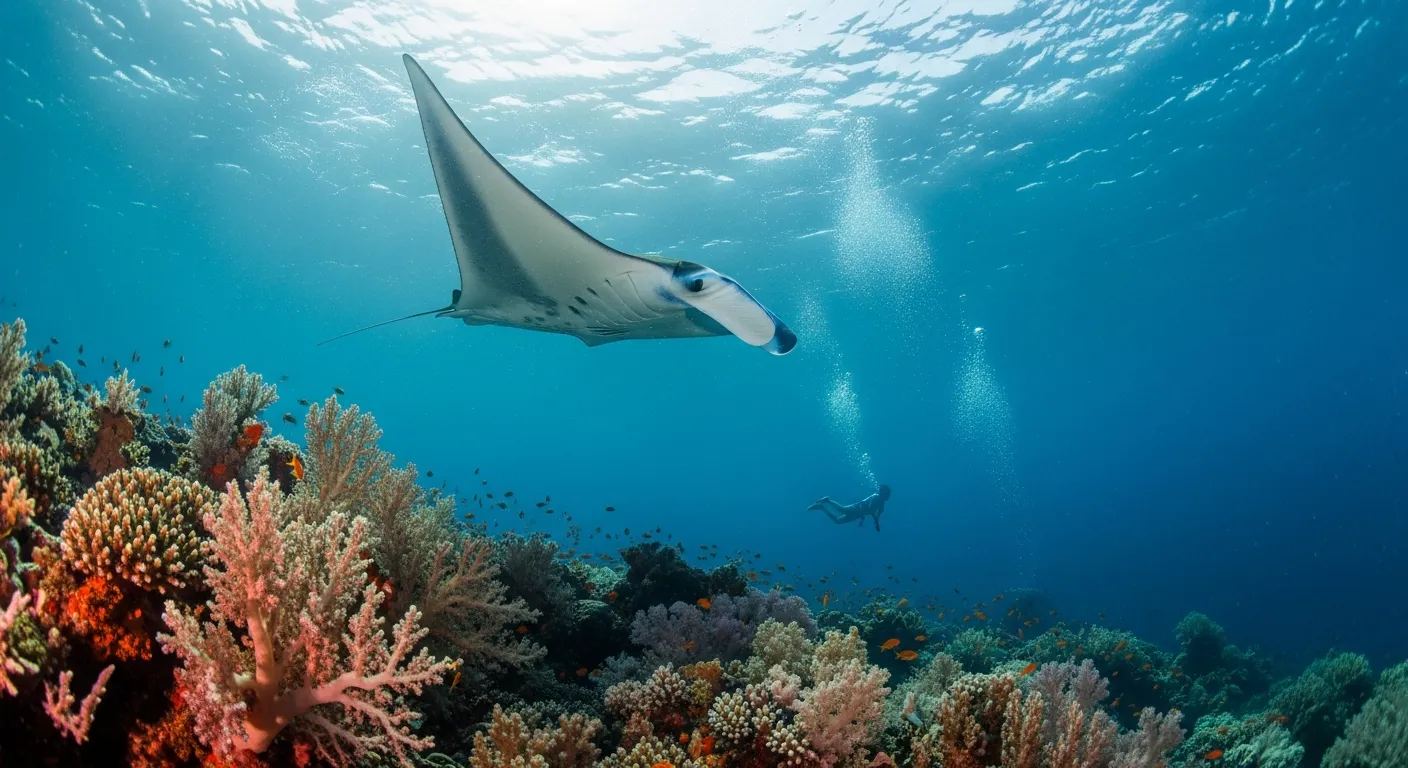
The famous one. Manta cleaning stations along a sandy plain. You hold position behind a coral mound, the mantas come in to be cleaned by little reef fish, and you watch them glide overhead like a flying-saucer parade. Easy depth, manageable current most days. This is the dive everyone wants.
Batu Bolong
A small pinnacle in the middle of a channel — the kind of place fish accumulate because there's nowhere else to go. The reef is covered. Comically covered. Fans, anthias, soft corals, sweetlips, big trevally hunting on the edges. Currents at Batu Bolong can be wicked; many operators do it as a "negative entry" (descend immediately) and stay on the leeward side.
Crystal Rock & Castle Rock
The big-fish dives, in the north of the park. Schooling jacks, sharks (whitetips, blacktips, sometimes greys), tuna patrolling the deep. Currents here are honest — drift dives where you let the water take you and watch the show. Strong and confident divers only.
The Cauldron / Shotgun
A natural amphitheater that fills with current and shoots divers through a slot. It's done as a controlled drift, but it's a thrill ride. Pelagic action when conditions line up. Not a beginner site.
Tatawa Besar
A gentler drift dive — the one I'd put first on someone's first day in the park to get them comfortable. Lovely soft corals, decent current, mantas occasionally cruise through.
The Currents — Real Talk
Komodo sits between the Indian Ocean and the Flores Sea, which means a lot of water moves through it on every tide change. The currents drive the marine life — that's why everything is so dense — but they also mean timing matters.
A few things worth understanding:
- Slack tide is the calm window between flows. Many sites are dived only at slack.
- Down-currents exist at sites like Batu Bolong and Castle Rock. Real divers respect them. If your guide briefs you about pulling yourself along the wall instead of fighting open water, listen.
- Surface current can be strong. Hold the descent line on entry; don't burn air finning toward a reef.
The good news again: a properly-planned dive day in Komodo is not stressful. The bad news: a poorly-planned one can be.
Pick Your Boat: Day-Boat vs Liveaboard
Two ways to dive Komodo:
Day-boats from Labuan Bajo. Cheaper, more flexible, you sleep on land. You'll do 2–3 dives per day. Good for divers who want to mix diving with other Komodo activities (Padar, dragons, snorkel-only days).
Phinisi liveaboard with a dive package. You sleep on the boat, dive 3–4 times a day for 3–6 days, hit sites that are too far for day-boats (Manta Alley, Banta, the deep north). This is the immersive option. If diving is the point of the trip, this is the move.
The catch with day-boats: you spend a lot of time on the water just getting to the sites and back. With a liveaboard, the boat just stays in the park.
What Skill Level You Should Be
Honest tier list:
- Open Water (newly certified, <20 dives): doable but constrained. Stick to gentler sites. Pick an operator that briefs thoroughly.
- Advanced Open Water (~30+ dives): you'll have a great time. Most sites open up.
- Experienced (~100+ dives, comfortable with current): this is when Komodo really sings. Crystal Rock, Castle Rock, Cauldron all become accessible.
If you're newly certified, do the first day or two at gentler sites and let your guide watch your air consumption + buoyancy before they take you somewhere current-driven. Don't oversell your experience to skip ahead — Komodo will humble you.
Gear Notes
A few things specific to Komodo:
- Reef hook — useful at Castle Rock and Batu Bolong if currents pick up.
- Surface marker buoy (SMB). Every diver should have one. Drift dives end with you popping up somewhere unexpected; the boat needs to find you.
- 3mm wetsuit minimum. Water is warm (27–29°C usually), but multi-dive days will chill you eventually.
- Bring your own dive computer if you can. Rental ones in Labuan Bajo vary in quality.
When to Go for Diving
The window most operators recommend is April–November for the south of the park (Manta Alley, etc.) and November–February for the north (Crystal Rock, Castle Rock — calmer there in the north-monsoon season). For most travelers wanting a balanced trip, June through October is the sweet spot. Visibility is at its best, currents are predictable, and operators are running their full schedule.
Booking Without Getting Burned
The Komodo dive market has solid operators and a few that cut corners on guide-to-diver ratios or skip site briefings. Things I look at:
- Guide-to-diver ratio — 1:4 or better. 1:6 is too many in current.
- Briefings. Should be detailed; should mention current direction, exit strategy, max depth.
- Group sorting. Operators that put advanced divers and OW newbies in the same group cut corners. Good operators split the group.
- Recent reviews mentioning specific sites and conditions, not vague "amazing!" testimonials.
For booking the boat itself, the cleanest place I've found to compare verified phinisi with diving packages is charterphinisi.com. Every boat is verified, prices and inclusions are upfront, and you can see whether the dates you want are open without going through three Instagram DMs.
One Last Thing
Komodo will give you some of the best diving of your life if you show up with the right boat, the right operator, and a realistic sense of your own level. Don't pick a site list off a forum and demand it — trust your guide to read the day. The mantas show up when they show up, the currents move when they move, and a good captain knows.
When you're ready to book, head to charterphinisi.com, find a boat with a proper diving package, and lock the dates. It's a trip you'll talk about for years.