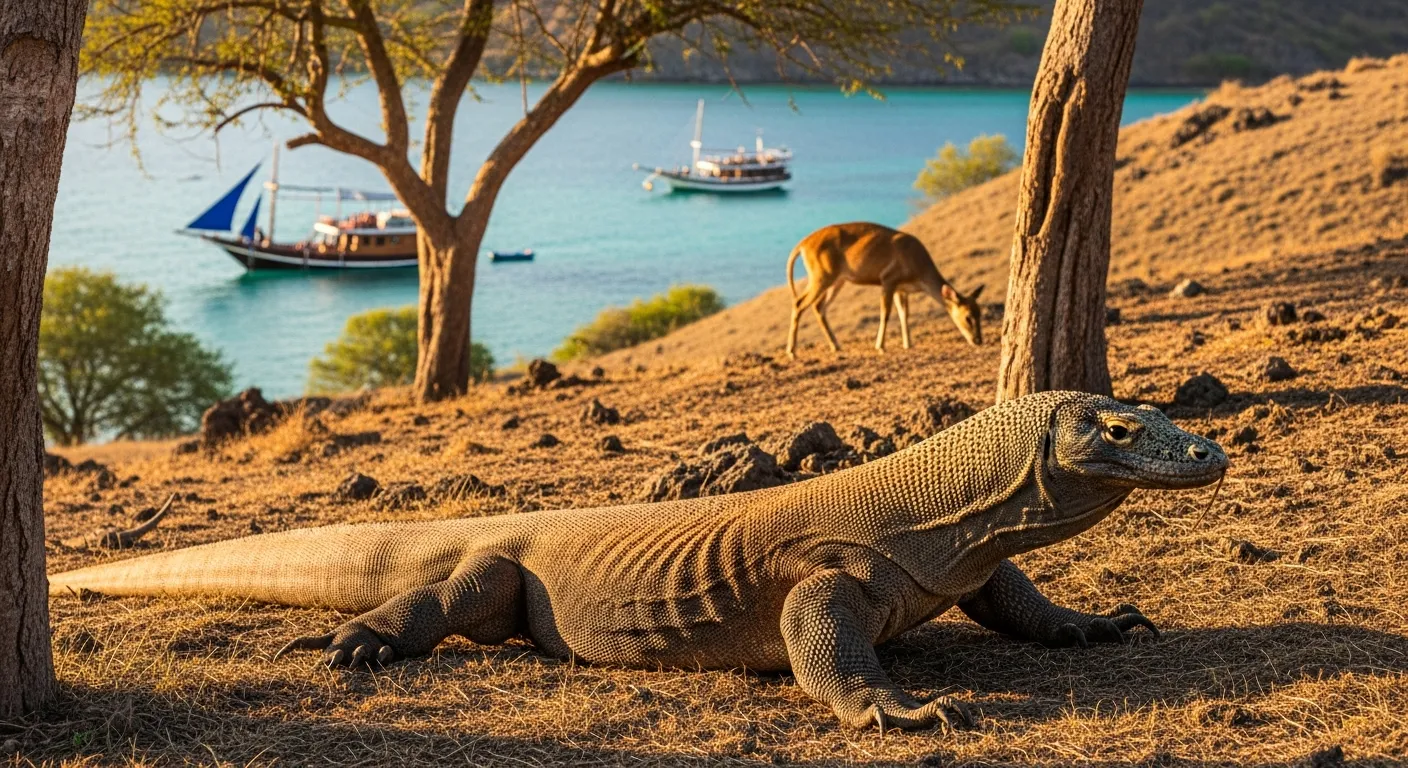
What You'll Actually See: A Komodo Island Wildlife Guide
Look, everyone tells you to come to Komodo for the dragons. And yes, you absolutely should. But after spending real time in the park, I can tell you the dragons are maybe twenty percent of the magic. The other eighty percent? That's the stuff nobody mentions in the brochures.
I'm going to walk you through what you can actually expect to see, where, and at what time of year — the kind of details I wish someone had told me before my first trip.
The Dragons (Yes, Let's Get Them Out of the Way)
Komodo dragons are real, they're huge, and they will absolutely look right through you with the dead-eyed stare of a creature that hasn't changed in millions of years. The two main spotting grounds are Komodo Island itself and Rinca Island.
Here's the thing nobody tells you: Rinca is better. Komodo Island is bigger and more famous, but Rinca has a higher dragon density and feels less staged. On Komodo you sometimes wait at a "feeding area" where the dragons hang around because tourists are predictable food sources. On Rinca you walk through actual dragon territory with a ranger who knows where the active nests are.
What you'll really see on a Rinca trek
Plan for the short trek (around 30 minutes) unless you're ready for a hot, hilly two-hour walk. On the short loop you'll usually see:
- 2–4 dragons sunning near the ranger station
- Timor deer (the dragons' main prey — yes, you'll see both predator and prey calmly ignoring each other)
- Wild water buffalo, often muddy and grumpy
- Long-tailed macaques screeching from the trees
- Cockatoos and orange-footed scrubfowl
The rangers carry forked sticks and they do, on rare occasions, need to use them. Stay between the rangers, don't separate from your group, and keep your hands in your pockets if you're a fidgeter — dragons track movement.
The Underwater Side Almost Nobody Mentions
This is the part I get genuinely emotional about. Komodo's marine life is, in my honest opinion, more impressive than the dragons. The waters around the park sit in the middle of the Coral Triangle, which means the biodiversity here is on another level entirely.
Manta Point
If you do nothing else underwater, do this. Manta Point (the well-known one is near Karang Makassar) is a cleaning station where reef mantas come to have parasites picked off by smaller fish. You snorkel above and they glide beneath you, three to four meters across, completely unbothered by your presence.
I've seen ten mantas on a single drift. I've also seen zero on a bad current day — so manage your expectations and try to go on a trip that includes more than one manta site.
Pink Beach
Yes, the sand is genuinely pink — it's crushed red coral mixed with white sand. But the real reason to stop here is the reef just offshore. In about an hour of snorkeling you can see:
- Black-tip reef sharks (small, harmless, gorgeous)
- Hawksbill and green sea turtles
- Schools of trevally and barracuda
- The occasional eagle ray cruising past
Other underwater spots worth hitting
- Batu Bolong — a small rocky pinnacle absolutely covered in fish, plus the chance of giant trevally and reef sharks
- Crystal Rock — clear water and pelagic action when the current's right
- Siaba Besar — the turtle highway, easy snorkeling, perfect for mellow days
Birds and the Bits Most People Miss
The birding in Komodo is genuinely good and almost completely overlooked. Yellow-crested cockatoos (critically endangered globally, surprisingly common here), green imperial pigeons, sea eagles wheeling above the cliffs, and frigatebirds shadowing the boat. If you bring a small pair of binoculars you'll be very, very glad you did.
On Padar Island — the famous three-bay viewpoint — keep an eye out for the orange-footed scrubfowl building their giant compost nests, and listen for the screech of Komodo cockatoos in the dry forest at the top.
When to Go for the Best Wildlife Encounters
This matters more than people realize.
- April–June and September–November: the sweet spot. Calm seas, manta season is active, dragons are mating in May–August (so they're out and about), and the water is clear for snorkeling.
- December–February: monsoon season. Rougher seas, more rain, but fewer tourists and the islands are emerald green instead of dry brown.
- July–August: peak tourist season. Great wildlife but you'll share Pink Beach with twenty other boats.
For mantas specifically, December through February has the highest manta counts (it's their feeding season), but the seas can be rough — so it's a tradeoff.
Practical Tips From Someone Who's Done It Wrong
A few things I learned the hard way:
- Wear actual hiking shoes, not sandals. Komodo islands are full of sharp volcanic rock and dragon-territory thorny brush.
- Bring a dry bag. Tender boat transfers from your liveaboard to shore involve wet feet at minimum.
- Carry a reef-safe sunscreen. Regular sunscreen genuinely damages the reefs you came to see.
- Don't bring meat or strong food smells onto the islands. Dragons can pick up scent from kilometers away.
- Tip the rangers. They earn very little and they're the reason this park still exists.
Why a Liveaboard Beats Day Trips Every Time
If you have the budget, do not — I repeat, do not — do this as a string of day trips out of Labuan Bajo. You'll spend half your daylight on a fast boat fighting current, and you'll only see the spots that fit into a single day window.
A 3- or 4-day phinisi liveaboard hits all the wildlife sites at the right tides, with sunrise at Padar and sunset at Kalong Island (where thousands of giant fruit bats fly out of the mangroves at dusk — genuinely one of the most magical things I've ever watched). You also get the morning manta dive when the current is right, instead of arriving at 11 AM with twenty other boats.
For booking a phinisi I'd honestly start at charterphinisi.com — they specialize in the Labuan Bajo and Komodo route, and the boats are properly maintained rather than the rough budget options you sometimes find when booking on the street in Labuan Bajo. Worth the extra money.
The Bottom Line
Komodo isn't just a dragon photo op. It's the most concentrated wildlife you'll see anywhere in Indonesia — dragons on the islands, mantas and reef sharks underwater, cockatoos and fruit bats overhead. Go for at least three days, charter a real phinisi, and let the rhythm of the boat decide your schedule.
Ready to plan it? Have a look at the boats and routes at charterphinisi.com — they'll match you to the right liveaboard for the season and the kind of wildlife you most want to see. Then come back and tell me you understood why I wrote eighty percent of this post about everything except the dragons.