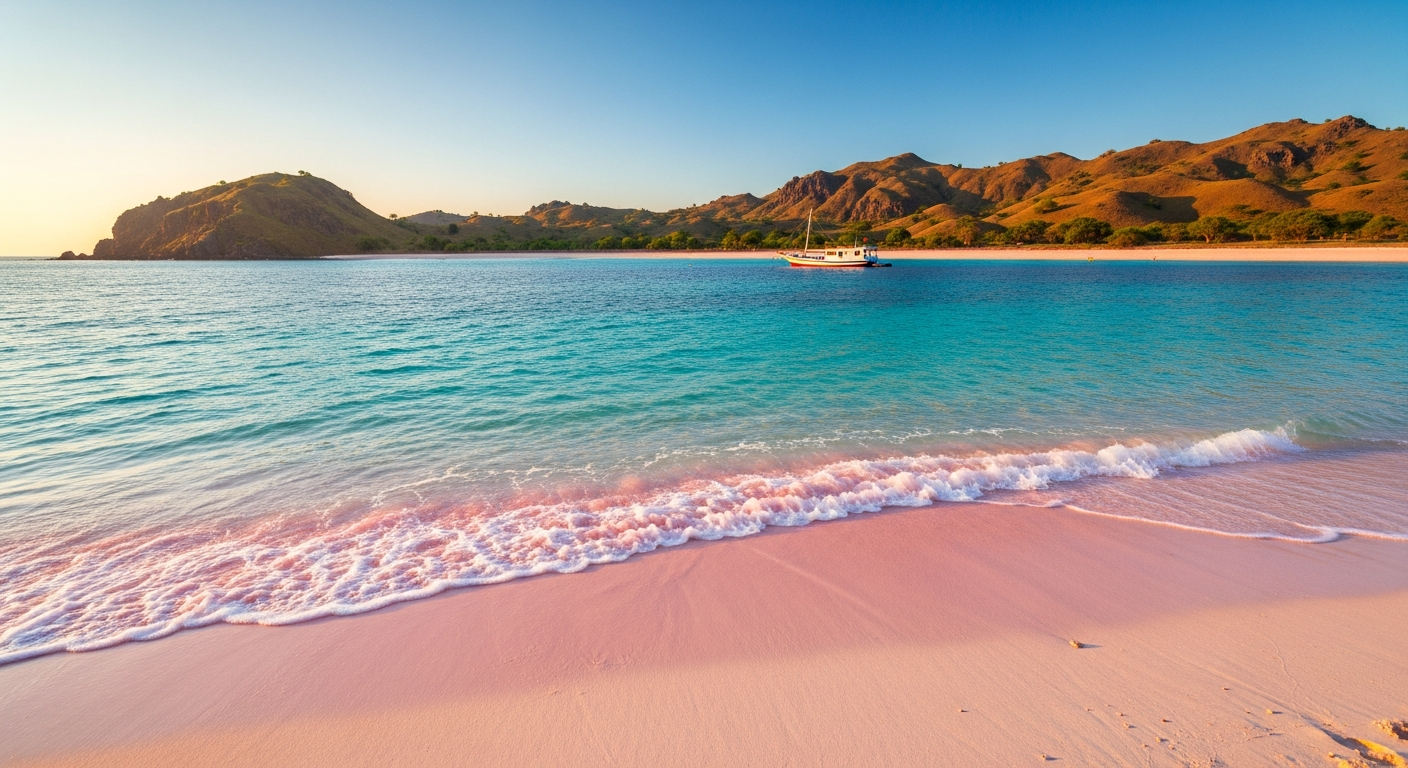
Pink Beach Komodo: What It's Actually Like (And Why It's Pink)
Let me tell you a small lie that's also true. The first time I saw Pink Beach in Komodo, I thought my eyes were playing tricks on me. I'd seen the photos, I'd read the science, I knew it was supposed to be pink — but standing on it, watching the waves roll in over sand that legitimately glowed rose-quartz when it got wet, I still couldn't quite believe it.
This is one of those rare travel destinations that genuinely delivers what the photos promise. Maybe even more. So let's talk about Pink Beach honestly — what it's like, why it's pink, when to go, and how to fit it into your trip without screwing it up.
Why It's Actually Pink (The Real Reason)
The sand is pink because it's not just sand. It's a mix of:
- White silica sand (the boring base)
- Crushed red coral microparticles from a specific type of foram (microscopic shell organism) called Homotrema rubrum
- Bits of red shell and pink-orange limestone fragments worn down over centuries
When those red and pink particles mix with the white silica at roughly a 1:5 ratio, you get this dreamy pale pink color. The pigment comes from the same iron-rich biology that makes some coral reefs look red. So technically, you're walking on a beach made of crushed ancient invertebrates. Romantic, right?
Only about seven beaches in the entire world have this exact mix at this concentration. Komodo's Pink Beach is one of the most accessible of them.
Wait — Which Pink Beach?
Quick clarification: there are actually two "Pink Beaches" in Komodo National Park:
Pink Beach (Pantai Merah) on Komodo Island
The famous one. The Instagram one. The one most boat itineraries stop at. About 30-45 minutes by panga from Komodo village. Crowded between 10am-2pm in high season.
Long Pink Beach (Pantai Merah Panjang) on Padar/satellite islands
Less crowded, longer stretch, slightly less vibrantly pink. Some liveaboards add this as a quieter alternative.
When most people say "Pink Beach," they mean the first one. That's what I'll focus on here — but ask your boat crew about the second one if you want a less-touristed version.
What It's Really Like When You Get There
Your boat anchors maybe 100 meters offshore in turquoise water so clear you can see the reef below. A small tender (panga) shuttles you to the beach in 4-person batches.
The sand isn't bright pink like a bottle of strawberry milk. It's a soft, romantic pale pink — like a sunset bleeding into white. When the sand is dry, the pink is subtle. When it gets wet from a wave, it intensifies and looks almost coral.
The beach itself is short — maybe 200 meters of usable sand, backed by dry savanna hills. There's no shade. There are no facilities. There's no Wi-Fi. There's nothing to do except swim, snorkel, take photos, and feel small in a good way.
The Snorkeling Is the Sleeper Hit
Most people fly in expecting the sand to be the main event. The sand is great. But the reef just offshore is what makes Pink Beach legitimately worth a stop.
We're talking shallow coral gardens 5-10 meters from the beach. Brain coral, staghorn coral, anemonefish, parrotfish, sea turtles cruising lazily through. The visibility is often 25+ meters. Within 30 minutes of swimming you'll see more marine life than at most resort snorkel spots.
Bring your own gear if you have it. Boat gear is fine but often leaky.
When to Go (For Pink-est Pink)
The sand always has its pink tint, but it looks most dramatic under specific conditions:
- Early morning (6:30-8am): Soft golden light. Empty beach. The pink looks dreamy and romantic. Almost no one there.
- Late afternoon (4-5pm): Long shadows, golden hour. Pink + amber light is unreal.
- Midday (10am-2pm): Most photos online are taken now. Bright but harsh light makes the pink look paler. Plus this is the crowded window.
- Rainy days: The pink looks slightly muted under gray skies.
If you have any control over your timing, push the boat captain to anchor here at dawn or dusk. The crew will know exactly what you mean.
What Most People Get Wrong
- "It's only 5 minutes — boring." Wrong. Most day-trip tours rush this stop in 30 minutes. A proper liveaboard gives you 2-3 hours, which is what you actually need to swim, snorkel, and stop hyperventilating about the color.
- "Bring lots of pink sand home as a souvenir." Do NOT. Removing sand from Komodo National Park is illegal AND environmentally damaging. The local rangers actively check. Pink Beach is regenerating, but slowly — every handful matters.
- "It's only the sand that's good." Way wrong. The reef and water clarity are arguably better than the sand itself.
- "I'll see it on a day trip from Labuan Bajo." You can, but it's a rushed 6-hour speedboat hop. A proper 2-3 night phinisi liveaboard lets you visit at the magic hours.
Practical Tips From Someone Who's Been
- Reef-safe sunscreen only. The coral is irreplaceable. Mineral SPF (zinc-based) is the move.
- Bring water shoes if you have sensitive feet. The sand is fine but the reef entry points are sharp.
- A snorkel mask and tube elevates the trip 10x. Even cheap masks work.
- No food vendors on shore. Whatever you bring from the boat is what you have.
- Photo angle tip: Get low to the sand, shoot toward the water. The shallow angle maximizes the pink-to-blue contrast.
- Drone rules: You technically need a permit ($30-50 USD) to fly a drone in Komodo National Park. Most boat crews can advise.
How Pink Beach Fits Into Your Trip
Pink Beach almost never stands alone. It's a stop on a Komodo itinerary. Typical liveaboard schedules:
2D1N Trip
Day 1: Departure + Kelor + Pink Beach (afternoon snorkel) Day 2: Padar sunrise + Komodo dragons + return
3D2N Trip (the sweet spot)
Day 1: Departure + Kelor + Pink Beach (afternoon) Day 2: Padar sunrise + Komodo dragons + Manta Point Day 3: Taka Makassar + Kalong sunset + return
4D3N+ Trip
Adds a second Pink Beach stop at dawn — this is when you get the empty-beach golden-hour magic.
Where to Book Without Getting Burned
The Labuan Bajo harbor has gotten a bit chaotic with touts selling cabins on boats they don't actually operate. The cleanest move is to book online before you fly in.
I use charterphinisi.com because they list real boats with real photos, real cabin layouts, real prices, and real-time availability. You can compare a few options, see exactly what's included, and lock in your dates from anywhere. They cover everything from budget shared-cabin open trips to full luxury private charters with proper dive setups.
When browsing, look for itineraries that explicitly include Pink Beach in the route (most do, but worth confirming). If you want the dawn/sunset magic-hour experience, mention that when requesting — some captains can adjust.
Time to Go See the Pink for Yourself
Pink Beach is one of those rare destinations that lives up to every expectation and then quietly exceeds them with the snorkeling. You'll come home with photos that look fake but are real, sand still in your hair (NOT your bag), and the kind of memory that pops up randomly for years afterward.
If you're even half-considering Komodo, head over to charterphinisi.com and look at the available phinisi departures. Pick the dates, pick the boat, and come let your eyes do that double-take.
The pink is waiting.