Sailing Indonesia on a Phinisi: What It's Really Like
The first time I stepped onto a phinisi, I couldn't stop touching the wood. I sound like a weirdo writing that, but I mean it — the deck, the railings, the cabin doors and frames are teak that a craftsman shaped with hand tools in a yard in Sulawesi a few years before. You can feel it. It doesn't feel like a boat the way a fiberglass yacht does. It feels like an object with a long story.
If you've never been on one and you're wondering whether it's worth picking a phinisi over a more standard Indonesian liveaboard or a cookie-cutter cruise — let me walk you through what makes them different. And why I now refuse to do Komodo any other way.
What Even Is a Phinisi?
A phinisi (sometimes spelled "pinisi") is a traditional Indonesian sailing schooner. The design comes from the Bugis and Konjo people of South Sulawesi, who've been building these things — by eye, no blueprints — for centuries. UNESCO put phinisi shipbuilding on its Intangible Cultural Heritage list a few years ago, which tells you something about how seriously the craft is taken back home.
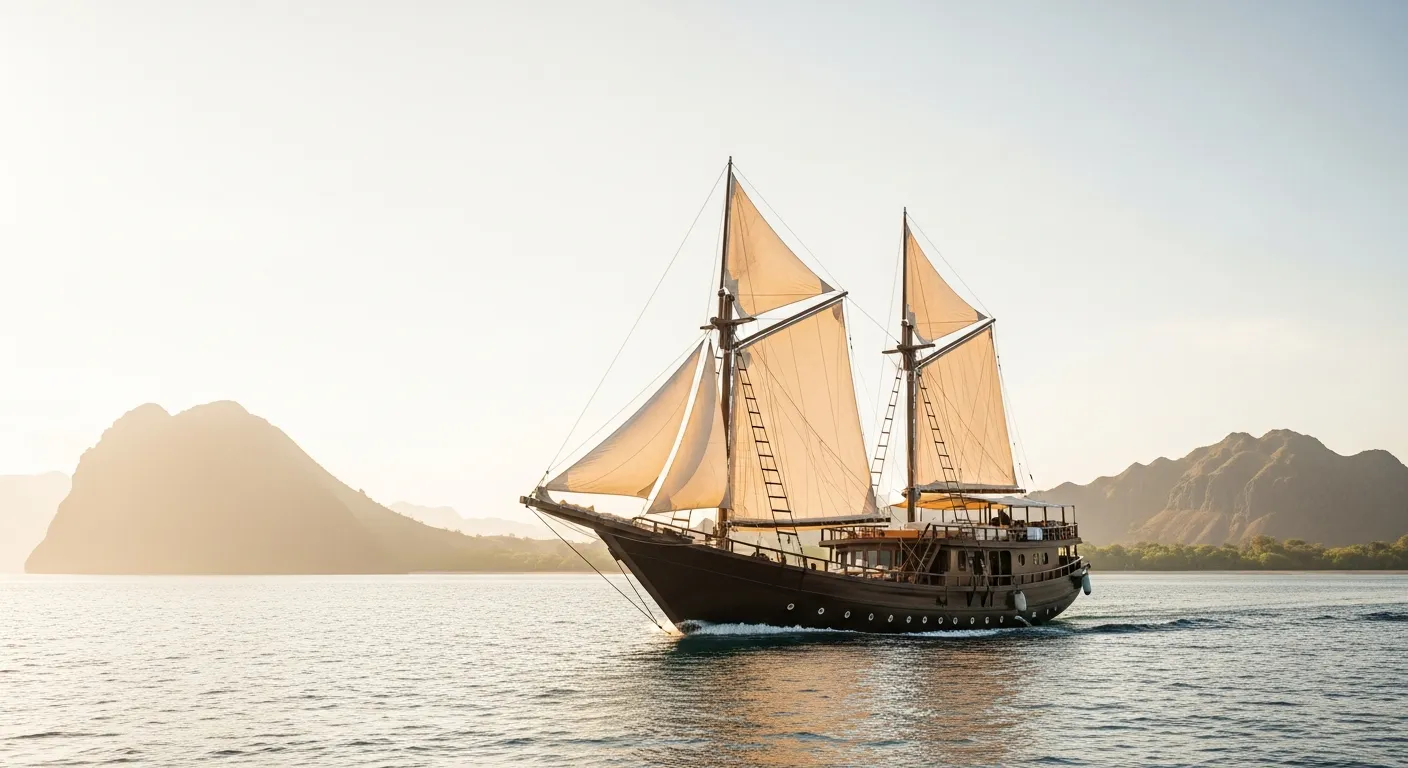
Modern phinisi used for tourism are basically the heritage shape with adaptations: en-suite cabins, AC, modern engines, proper galleys. The hull, the rig, and the soul are still the original thing. They look unmistakable on the water — twin masts, that long curved bow, sails the color of cream.
How They're Built (Still by Hand)
This is the part most people don't realize. Phinisi are built in Bira (South Sulawesi), on the beach, by extended families who've been doing it for generations. There's no factory. The keel goes down on the sand, the ribs come up around it, and the whole boat takes shape over months — sometimes a year — using mostly hand tools and traditional joinery.
When the boat is finished, they roll it into the sea on logs. Yes, logs. There's a ceremony involved.
This matters because every phinisi is slightly different. No two have the same hull. No two have the same deck layout. Some captains are obsessive about little things — an extra sun shade on the foredeck, a particular galley setup — and you can feel those choices when you're on board.
What It Feels Like Onboard
Mornings
You wake up to the smell of fresh coffee and the sound of the boat creaking. Phinisi are wood, so they talk to you. Little flexes, gentle pops. Once you get used to it, it's the most reassuring sound in the world.
Most boats anchor for the night, so morning means glassy water, no wind, sometimes mist on the islands. Crew brings coffee to your cabin if you want it. You eat breakfast on the upper deck in your swimsuit.
Deck Life
This is where you spend most of your day. Phinisi have generous deck space — beanbags, low cushions, sometimes a hanging swing. You'll see people reading, napping, talking, swimming off the back ladder. The pace slows down to about 30% of normal life.
The crew is doing their work around you — tying lines, prepping food, repositioning the boat — but it doesn't feel intrusive. They've done this thousands of times.
Anchorage Nights
By 5:30 or 6 you're anchored somewhere quiet. The lights come on, dinner gets served, and someone notices the milky way overhead. There's no light pollution out there. Bring a blanket up to the bow — you can lie back and watch satellites cross the sky.
I've slept some of the deepest sleeps of my adult life on a phinisi deck.
The Routes You Can Actually Do
Three areas dominate phinisi sailing in Indonesia, and each gives you something different.
Komodo / Labuan Bajo
The classic. 3D2N or 4D3N from Labuan Bajo, weaving between Padar, Pink Beach, Komodo Island, Manta Point, and a handful of quieter anchorages. The water is the bluest you've seen, the islands look prehistoric, and the dragons are real. Best for first-timers — everything is concentrated and the trip is easy to plan.
Raja Ampat
The pinnacle. Longer trips (7+ days, usually) into the most biodiverse marine ecosystem on the planet. Karst islands rising out of impossibly clear water, reefs that are still genuinely thriving, manta cleaning stations. Logistics are harder (Sorong as a gateway), trips are pricier — but if you've ever wondered what reef diving was like in 1970, Raja Ampat is the closest answer.
Banda Sea / Forgotten Islands
The route most people haven't heard of. Long crossings, remote villages, ridiculous diving (hammerheads in season), the genuine sense of going somewhere most travelers will never go. October–November is prime. This one is for your third or fourth phinisi trip, not your first.
Picking the Right Boat (and Avoiding the Wrong One)
Phinisi range wildly in quality. There's a luxury tier with crystal glasses and salads with edible flowers, and there's a budget tier with bunks and a fan. Both are valid. What you want to avoid is the middle ground that's marketing itself as luxury and isn't.
Things I look at now:
- Cabin photos of the exact boat. Not a generic "fleet" photo, not borrowed marketing shots. The actual cabin you'll sleep in.
- Crew-to-guest ratio. Better boats run roughly 1 crew per 1.5 guests. Bad boats run one captain and two cousins.
- Engine + safety basics. Nobody wants to read a maintenance log on holiday, but ask whether the boat has a recent engine refit, life jackets, a tender. Decent operators answer immediately.
- Recent reviews. Not the operator's testimonials page — actual recent reviews on Google or TripAdvisor.
The Komodo charter market in particular has a lot of pretty Instagram pages and a much smaller pool of actually-pretty boats. The cleanest place I've found to compare verified boats with real prices and real availability is charterphinisi.com. Every boat there is verified, the cancellation policy is in plain English, and you can actually see whether the dates you want are open — instead of doing the Instagram DM dance with three different operators.
A Few Practical Things
- Trips are seasonal. May–October for Komodo, October–April for Raja Ampat, September–November for Banda. Plan around the weather; the boats know.
- Cell signal is patchy at best. Don't fight this. It's part of the trip.
- Tip the crew. IDR 100–200k per guest per day, given to the captain to distribute. They earn it.
- Bring less than you think. Cabins are small, laundry isn't a thing, you'll wear the same swimsuit four days in a row.
One Last Thing
A phinisi isn't a "fancier vacation." It's a way of being on the water that pretty much doesn't exist anywhere else in the world. You're sailing a boat hand-built on a beach in Sulawesi, in waters that 95% of travelers will never see, with a crew whose families have done this for generations. It changes you in small ways you don't notice until you're back home staring at your calendar wondering when you can go again.
When you're ready to do it properly, head to charterphinisi.com, pick the boat that fits your group and dates, and book. The first morning you wake up anchored at Padar with a coffee in your hand will explain everything I couldn't.