Snorkeling in Komodo National Park: A Real Friend's Honest Guide
Real talk: snorkeling in Komodo is one of those experiences that people massively underrate before they go. Everyone shows up for the dragons. They leave talking about the mantas, the turtles, and the moment a 1.5-meter parrotfish swam straight up to their mask like it was checking them out.
Komodo sits in the Coral Triangle — the most biodiverse marine region on the planet. More fish species per square kilometer than the entire Caribbean. And the magic is that you don't need to be a diver to see most of it. Most of the best sites are 2-5 meters deep, perfect for snorkeling.
Let me walk you through what's actually waiting under there, where to go, and how to do this properly.
The Quick Reality Check
- You don't need to be a strong swimmer. Most snorkel sites are calm, shallow, and well-supervised.
- You don't need fancy gear. Decent mask + snorkel + fins. That's it.
- You don't need any certification. Just show up with a swimsuit.
- You will see things you can't believe. Manta rays, turtles, reef sharks, schools of fish so dense they look like a single moving organism.
- Best done from a phinisi liveaboard. Day trips work but you miss the magic-hour sessions.
The Best Snorkel Sites (Ranked)
Not every site in Komodo is equal. Here's how they actually compare.
1. Manta Point (Karang Makassar)
The obvious headline. A long sandy channel where reef mantas come to get cleaned. Snorkelers hover at the surface above the cleaning station while 3-4 meter mantas glide around 2-8 meters below. You can spend 60+ minutes in the water here. Currents can be moderate — your boat will pick the right tide.
2. Pink Beach Reef
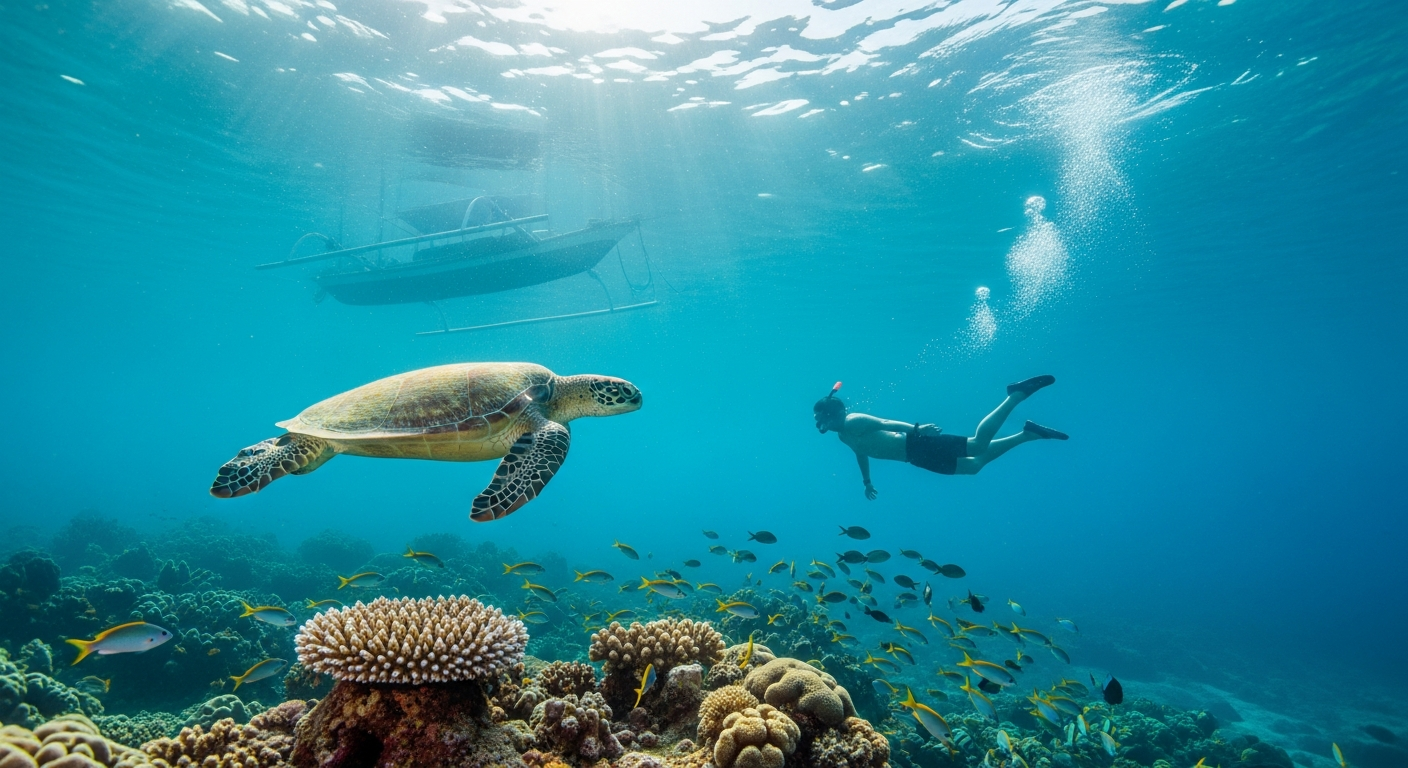
Underrated. Right offshore from the famous pink sand beach is a shallow coral garden 5-10 meters from shore. Brain coral, staghorn coral, anemonefish, parrotfish, and green sea turtles cruising lazily. 25-meter visibility on a good day. Less crowded than Manta Point.
3. Taka Makassar
A tiny sandbar in the middle of the strait. The reef wraps around the sandbar in shallow water. You can walk on the sand, then snorkel a 360° reef. Surreal experience. Often combined with manta visits.
4. Siaba Besar (Turtle City)
The nickname says it. Turtles. So many turtles. Greens and hawksbills cruising through soft coral fields. Shallow, calm, perfect for first-timers.
5. Kanawa Island
Close-to-LBJ option. Easy reef snorkel right from shore. Good for warmup or if you're doing a day trip.
6. Sebayur Kecil
Quieter, less-visited. Vibrant soft coral and schools of fusiliers. Good for slow afternoon sessions.
A proper liveaboard hits 3-5 of these across a 3-day trip. Day trippers from LBJ usually hit 2-3 in a rushed afternoon.
What You'll Actually See
Let me describe an average 45-minute snorkel session at Pink Beach Reef or Siaba.
First 5 minutes: You get over the initial "wait, this is real?" gasp. Visibility is 20-30 meters. The reef stretches in every direction. The water is body-temperature warm.
Minutes 5-15: You spot your first turtle. They are not afraid. They will swim past you, slowly, casually, sometimes within arm's length. Do NOT touch. Just float and watch.
Minutes 15-30: Schools of anemonefish dancing in their host anemones (the Nemo moment). Parrotfish the size of small dogs grazing on coral. Trigger fish giving you side-eye. Maybe a bamboo shark sleeping under a ledge (look, don't poke).
Minutes 30-45: The bigger stuff starts showing up — eagle rays gliding past, schools of fusiliers flowing like a single shimmer, occasional reef sharks patrolling deeper edges (whitetip or blacktip — harmless to humans).
The shocking thing isn't the variety. It's the density. Everywhere you look, there's life.
Currents (The Real Story)
Komodo has currents. Some sites are gentle. Others — like Manta Point on a strong tide — can be 2+ knots. That's faster than most people can swim against.
What to know:
- A good captain reads tides. Sites are visited at appropriate tide windows.
- Stay with your group + guide. Drift snorkeling is the norm — you flow with the current, the boat picks you up downstream.
- Don't try to fight the current. Just float, flow, and signal the boat if you're tired.
- If you're a weaker swimmer, mention it. The crew will pair you with a guide who shadows you closely.
This isn't dangerous if you're with a proper operator. It IS dangerous if you book a sketchy day trip with no safety briefing.
Gear: Bring or Borrow?
Borrow (boat gear is fine):
- Mask + snorkel + fins. Most decent operators supply these. Quality varies — sometimes the masks leak.
- Reef hook. Useful at Manta Point on strong currents. Premium boats have them.
Bring your own (if you have it):
- Your own mask if you wear contacts. A leaky mask is the difference between magic and misery.
- Reef-safe sunscreen. This is non-negotiable. Mineral SPF (zinc-based).
- Underwater camera or GoPro. Even cheap ones get incredible footage in Komodo's visibility.
- Rash guard. Long-sleeve UV shirt — saves your shoulders and back from sunburn.
- Anti-fog spray (or just spit, which works fine).
If you're new to snorkeling: bring your own mask. Even a $30 mask from a dive shop is better than borrowed equipment that doesn't seal to your face.
When to Go
Snorkeling is good year-round in Komodo, but conditions vary:
- April-October: Dry season. Calm seas, clear water, visibility 20-30 meters. Best window.
- December-March: Wet season. Plankton blooms (= more mantas) but reduced visibility (15-20 meters).
- November: Transition. Mixed conditions but generally good.
- Avoid: January-February if you can. Sea crossings are rough.
For mantas specifically: December-March is peak. April-June is the second-best window. October-November is good too.
Etiquette (This Matters)
The Komodo reef is one of the healthiest reef ecosystems on the planet, partly because operators and visitors actually follow basic rules. Don't be the person who breaks them:
- No touching. Coral, turtles, mantas, fish — none of it. Coral takes decades to grow.
- No standing on coral. Even shallow areas — find sand to rest on.
- No feeding fish. It changes their behavior permanently.
- Use reef-safe sunscreen. Oxybenzone and octinoxate kill coral. Mineral SPF only.
- No chasing mantas/turtles. They'll come to you if you stay still.
- Pack out everything. No trash overboard, ever.
The operators that care about this are the operators you want to dive with.
How to Plan Your Snorkeling Trip
Two main formats:
Day Trip from Labuan Bajo (6-8 hours)
Cheap (~IDR 700k-1.5M per person), hits 2-3 sites, rushed. Good if you only have a day. Bad if you want to hit the magic-hour windows.
Phinisi Liveaboard (2-4 nights)
The real move. You hit 4-6 snorkel sites at the right tide windows, with proper crew supervision and time to relax between sessions. Sleeping on the boat means you wake up at the next site instead of bouncing back to LBJ each evening.
For a snorkel-focused 3D2N liveaboard, expect IDR 5-15 million per person depending on boat tier.
How to Book Without the Harbor Mess
The Labuan Bajo harbor has touts selling cheap day trips. Some are great. Some are dodgy. The safer move is to book a real phinisi liveaboard online before you fly in.
The cleanest way to compare boats — with real photos, real-time availability, and itineraries that include the best snorkel sites — is charterphinisi.com. You can filter by 2D1N / 3D2N / 4D3N trips, see exactly what's included, and lock in your spot from your hotel WiFi before you fly into LBJ.
They list everything from budget shared-cabin open trips to full luxury private charters.
Time to Get In the Water
Komodo snorkeling is one of those rare experiences that delivers more than the photos promise. You'll come home with hours of GoPro footage you'll watch for years, slightly sun-burned shoulders, and a permanent shift in what you think "good snorkeling" means.
If you've been considering Komodo, head to charterphinisi.com and look at the available phinisi trips. Pick the dates, pick the boat, and go float on something incredible.
The turtles are already there. They're not going anywhere.