When to Actually Visit Labuan Bajo (Honest Guide)
Most "best time to visit" articles will tell you May to October and call it a day. That's not wrong, but it's about as useful as telling you "eat food when you're hungry." If you're trying to plan an actual trip, you need more than a six-month window — you need to know which months are sweaty and crowded, which ones are quiet and perfect, and which ones will actively ruin your trip.
So let me walk you through what each part of the year actually looks like in Labuan Bajo. I've been a handful of times now, across different seasons, and I'll be straight with you about the tradeoffs.
The Two-Season Truth
Labuan Bajo runs on two real seasons:
- Dry (roughly April through October): clear skies, calm seas, that postcard turquoise water you came for. This is when you want to be there.
- Wet (November through March): unpredictable. Thunderstorms, choppy water, dive operators going on hiatus, sometimes flights getting delayed. Possible, but I wouldn't plan a first trip around it.
Within the dry season, though, the experience varies enormously. That's the part nobody tells you.
Month-by-Month
April — The Door Cracks Open
The wet season is winding down. There can still be the odd downpour, but the sea calms down and the islands start looking like themselves again. Boats that were dry-docked are coming back online. Crowds are basically nonexistent. You'll have Padar to yourself.
The catch: water visibility is still recovering from the storms. Snorkeling and diving are good, not great. I'd say April is for the early bird who values empty trails over crystalline reefs.
May to June — The Sweet Spot
This is honestly the best window for most people. Dry, calm, water clarity rebuilding fast. The hills are still a bit green from the recent rains so the islands look slightly less burnt-yellow than they will in August. Crowds are present but reasonable. Prices haven't peaked yet.
If you can swing your dates here, do it. It's the move.
July to August — Beautiful but Busy
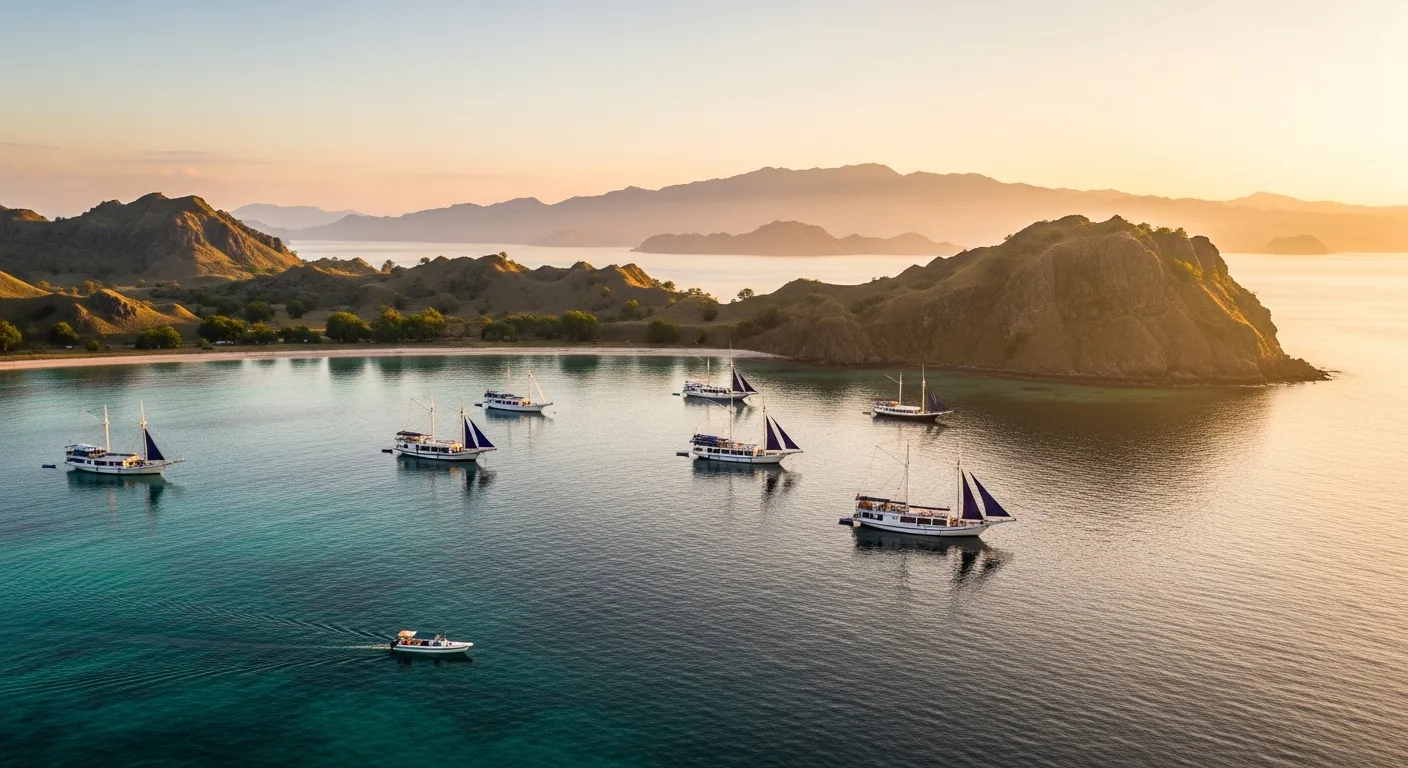
Peak season. Everyone has read the same blog posts you have. Padar at sunrise looks like a slow-moving line at a theme park entrance. Pink Beach can have eight or nine boats anchored at it simultaneously. Operators raise their prices. Hotels in town book out weeks in advance.
The sea is glassy, the visibility is great, and the islands are gloriously yellow. I'm not telling you it's bad — I'm telling you you're going to share it. If you have school-age kids and these are the only weeks you can travel, fine. Just go in with eyes open.
September — My Personal Favorite
This is the secret window. Same weather as August, half the crowds. The European school holidays are over, the Australian winter rush has wound down, the Indonesian domestic peak from Idul Fitri is long gone. Operators still have full crews and clean kitchens, but they're not stretched thin.
If you're flexible, aim here.
October — Last Call
Still dry, still beautiful, but you can feel the season tilting. The islands are at their driest — almost desert-amber. Hills look like a Wes Anderson poster. The water is warm and clear.
Toward the end of the month, the first storm fronts can roll in. It doesn't ruin a trip, but it might cost you a single day of itinerary. I think of October as "summer's exit ramp" — gorgeous, but check your travel insurance.
November to March — Be Honest With Yourself
A lot of people insist on going in wet season because flights are cheap and they read one blog post about how "actually it's still nice." Sometimes it is. Often it isn't.
What you're risking: thunderstorm afternoons that wash out snorkeling, choppy crossings that make small boats unpleasant, dive operators going on partial hiatus, the Padar trail turning into a mud slide, and your Komodo dragon trek getting cut short by lightning. The water clarity drops. Some boats genuinely refuse to operate certain routes.
If wet season is your only option and the trip is non-negotiable: book a bigger, more stable boat, build a flex day into your itinerary, and lower your expectations on water visibility. Don't expect August.
What Actually Matters (vs. What Travel Agents Will Tell You)
A few things that aren't on most monthly breakdowns but actually shape your trip:
- Indonesian school holidays (mid-June through July, plus the week around Idul Fitri) bring huge domestic crowds. Boats sell out, hotels jack prices up, the airport gets chaotic. Worth checking the calendar.
- Manta season is year-round at Manta Point, but the best sightings cluster in the cooler months — July through September.
- Komodo dragons are active year-round. Don't pick a month for the dragons. They're not migratory. Pick a month for the weather.
- Diving conditions peak around July through October. Visibility hits 30+ meters, currents are predictable, the marine life is spectacular. If diving is the point of the trip, plan accordingly.
Weather You Can't Plan For
Even in peak dry season, Labuan Bajo can throw an unexpected day at you. A windy afternoon, a rogue squall, a grey morning. Build a buffer day into your trip if you can. The captains know how to reposition for safety, but they can't conjure a sunset.
Also: the sun in dry season is no joke. You will burn through reef-safe sunscreen at a pace that will surprise you. Buy more than you think you need.
Booking Strategy by Season
A quick playbook for actually pulling the trip together:
- For May–June and September: book 6–8 weeks ahead. Boats fill up but not insanely fast.
- For July–August: book 3–4 months ahead, especially for premium phinisi or shared-trip cabins on popular boats.
- For April or October: you can often book 2–3 weeks out, but you'll have less flexibility on which boat.
- For wet season: last-minute deals exist if you're willing to gamble on the weather.
The cleanest way I've found to compare boats and dates without endless Instagram DMs is charterphinisi.com. Every boat is verified, prices are upfront (per trip for private, per cabin for shared), and you can see real availability instead of asking "is this date open?" three times across different operators. It's saved me hours.
One Last Thing
If I had to pick one date in the whole year for a friend's first Komodo trip, it would be the second week of September. Dry, calm, post-rush, pre-storm, water clarity at its peak, sunsets the color of a peach. You'd have a perfect trip.
When you're ready to lock something in, head to charterphinisi.com, pick a boat that fits your group, and grab the dates that work. The rest will sort itself out — Labuan Bajo always does.